

Travel Back in Time at the Essex Steam Train and Riverboat
Step into the past with my review aboard the Essex Steam Train and Riverboat Cruise, and see why its the best way to beat the heat or enjoy the fall foliage.

It's remarkable to think that in earlier times, if you weren't walking, your only options for transportation were trains or riverboats. Nowadays, we often take for granted how easy it is to hop into a car or use buses and rideshare services. Trains were essential back then, providing a quicker way to move goods, cargo, and people. This incredible invention from the mid-19th century relied on tracks and rail cars that followed a timetable. It transformed travel, similar to how airplanes enable us to move items and people in just hours instead of days. In the northeastern United States, many rail lines were constructed, some of which have been adapted for cargo and passenger services, like the Metro North system near New York City, as well as for walking and biking trails such as the Walkway Over The Hudson. Furthermore, there's a delightful tourist attraction called the Essex Steam Train, which maintains the rail car and part of the rail line, taking visitors along the western shore of the Connecticut River from Essex to Deep River. This relaxing ride offers a glimpse into a time when trains and riverboats were the main modes of transportation, providing a wonderful chance to delve into the history of the towns along the Connecticut River.

The Evolution of the Valley Railroad into the Essex Steam Train


According to the Essex Steam Train and Riverboat website, this history museum on wheels has its roots in 1868. Back then, James C Walkeley, the president of the Charter Oak Life Insurance Company, laid the groundwork for this train by securing a charter from the State of Connecticut to create the Valley Railroad Company. The railway would run next to the Connecticut River, and since there were no bridges or tunnels needed, it was smooth sailing. By 1871, the 45-mile route from Hartford to Old Saybrook was operational. The Valley Railroad initially had one car for cargo and passengers, plus four additional cars for passengers, making 15 stops and running six days a week. However, the railroad faced financial difficulties soon after it started, and within ten years, it became part of the New Haven Railroad. Although the rail line continued to operate for several decades, interest began to decline shortly after World War I as cars became the preferred mode of transport. This decline continued into the 1950s and 1960s, leading to the end of service in 1968. After several ownership changes, Penn Central took over the line before handing it over to the State of Connecticut, thanks to a wave of local volunteers eager to save the rail line. In 1971, a 22-mile section of the rail line reopened as the Essex Steam Train, and it has been running ever since, giving passengers from around the globe a chance to step back in time and enjoy a train ride along the Connecticut River.
In fact, according to CTInsider, "The multicultural nature of the train’s visitors prompted changes such as the release of an informational pamphlet written in Mandarin, which is currently offered to Chinese passengers as an alternative to the English voiceovers spoken during the train ride."

How is the Experience on the Essex Steam Train?


For this experience, I booked a first class seat. You will be in the first car of the train, which is a set of roughly 35 individual chairs. You will need to arrive 30 minutes early mostly to park your vehicle and make the long walk around the train to the ticket window where you will pick up your ticket, just give your last name and they will hand your ticket to you. Here's a pro tip for the first class section: Seats are open and first come first serve, so grab a seat on the right side of the train car, as you will see and experience far more than on the left side. There is a small drink menu available where you can purchase beer, wine, spirits, cocktails and soft drinks for an additional fee (and it’s actually fairly reasonably priced too!). You can also bring water or soft drinks on board too, just don’t try to sneak on alcoholic beverages!
The train ride begins in the town of Essex promptly at the reserved time of 12:30pm. You’ll hear the loud whistle of the train as the train moves north through the line through the towns of Chester and Deep River. The train that you're on is an authentic coal burning steam locomotive, built in 1920. Over 3 tons of coal are shoveled in and burned on this one journey. The train ride is narrated but not for the entire journey. You’re moving through mostly wooded areas, and the train whistle blows loud through various intersections as the locomotive slows through. As the train continues north, you will pass through Post Cove and the Florence Bidwell Sanctuary, a preserved wetlands area and that is home to various birds, and you will see the exterior of Gillette Castle State Park as you straddle the western shore of the Connecticut River, and you’ll pass through the former train stations in these towns, and hear a brief history of the area including its involvement in shipbuilding.


The train ride portion lasts about 35 minutes. It will take 25 minutes to go from Essex to the northern terminus in Chester, where it will then reverse to the port where the riverboat will meet the train and guests will exit from there. For this experience, I took a ride on a hot day in late June and it was actually quite enjoyable. The cars were not air conditioned, but the windows were wide and the gentle breezes from the river and the movement of the train is bound to keep you cool and comfortable throughout. The windows are open and you can smell the trees and the marsh and it’s a wonderful smell. When the train stops however? It's as if a fan has stopped moving and the hot and humid air stagnates and it can get quite hot. At around 40 minutes into the journey back to Essex, you’ll stop at Deep River Landing, where you will board the Riverboat portion of the excursion.

How is the Experience on the Riverboat Cruise?
Right after you get off the train, you'll hop on the Riverboat. Most folks will gather on the middle deck, but feel free to head down to the lower deck or up to the upper deck once the boat starts moving. Just make sure you're seated when the boat departs. The captain will go over some rules and explain how everything works for the trip. The whole journey will last around 1 hour and 15 minutes as we cruise up and down the Connecticut River.


The Riverboat cruise features a narrator who steps in after the captain addresses the passengers. This narrator has a laid-back and spontaneous style, opting not to stick to a script, which was a nice change from the more scripted train segment. Plus, the narrator engaged with the passengers and added a lot of humor, which is always a win. The cruise heads south along Deep River landing. The narrator briefly touched on the effects of the Great Hurricane of 1938, which devastated the Connecticut coastline. We cruised past the Deep River marina on our right and Eusatasia Island on our left, which used to be called "Christmas Tree Island" because of the many pine trees that were harvested for Christmas trees, but those trees are long gone. Now, it’s a haven for various wildlife, including deer and birds, and is mostly uninhabited.
The cruise moves at a relaxed, leisurely pace, allowing you to savor the gentle breezes that keep you cool and comfortable as it navigates the river—ideal for a hot day! The boat will first head south around Eustasia Island, then continue north along the river, where you'll catch a glimpse of Selden Neck Island and State Park on your right, the largest island in the Connecticut River. Selden Island is a popular camping destination in the state, featuring four outhouses, which are essentially the only structures present, and you might encounter black bears, bobcats, and deer wandering about the island. As I was cruising the river, I noticed many boaters and kayakers enjoying the water.
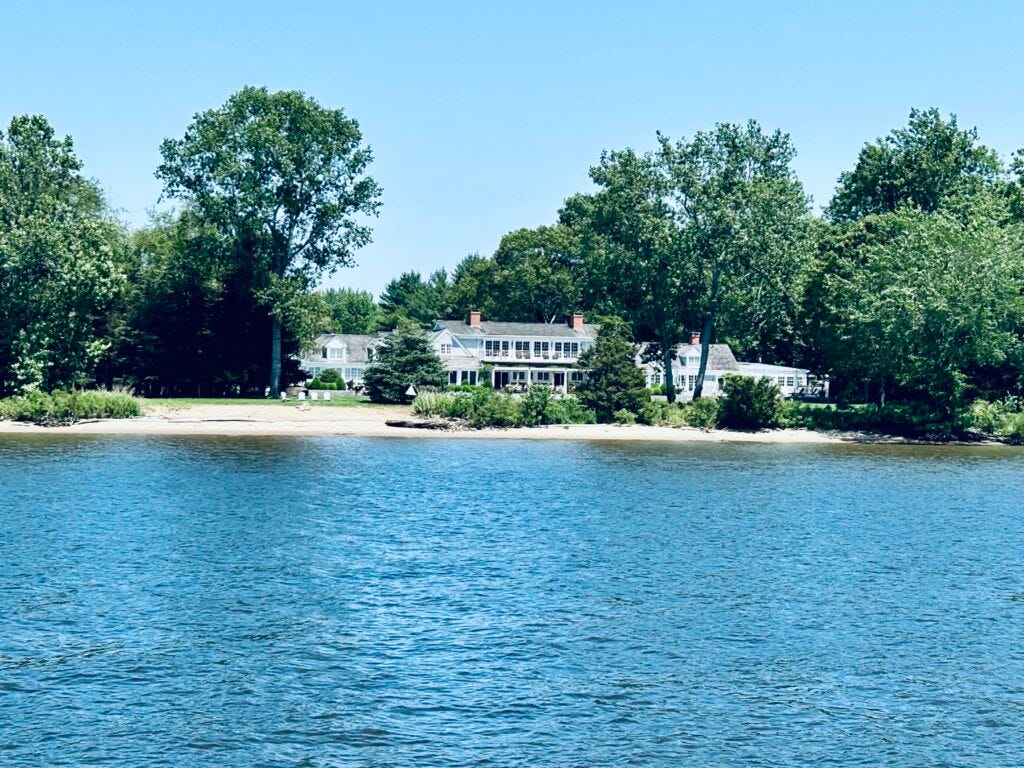
Fun moment: We passed by the house and mansion along the river formerly owned by the inventor of the “clapper” electric switch device, and the narrator explained how dinner cruises would pass by the house and passengers would yell out “clap on, clap off”, and the lights wouldn’t go on!
Feel free to explore the boat, and I really recommend you do. When the boat is moving, you can head to either the lower or upper deck. I chose to go to the lower deck, where the snack bar and restrooms are found. You’ll get a nice view of the river from there, but you might miss out on the narration. The snack bar has hot dogs, pretzels, chips, a few wraps, plus beer, wine, spirits, and soft drinks—all at surprisingly reasonable prices. I had a Dewers scotch with Diet Coke. Just a heads up, you might get splashed on the lower deck, especially when speedboats zoom past! The narrator puts it perfectly: "if you don’t get wet? You didn’t get your money’s worth!"


The upper deck is the sunniest spot on the cruise, giving you stunning views of the river and the area around it. You can feel the breeze, and it’s just amazing to be out there soaking it all in. It’s the perfect spot to enjoy a cocktail or your favorite drink while taking in the scenery. I highly recommend using sunscreen, especially on those hot summer days. You definitely won’t want to leave!
After the cruise concludes, you'll return to Deep River Landing, where you'll wait until the train arrives. This train will transport you back to Essex, completing your journey in approximately 20 minutes. The schedules for the train and riverboat are synchronized, allowing you to see passengers disembarking from the train for the next riverboat cruise just as you board the train to Essex.

Is the Essex Steam Train and Riverboat Cruise Worth the Visit?
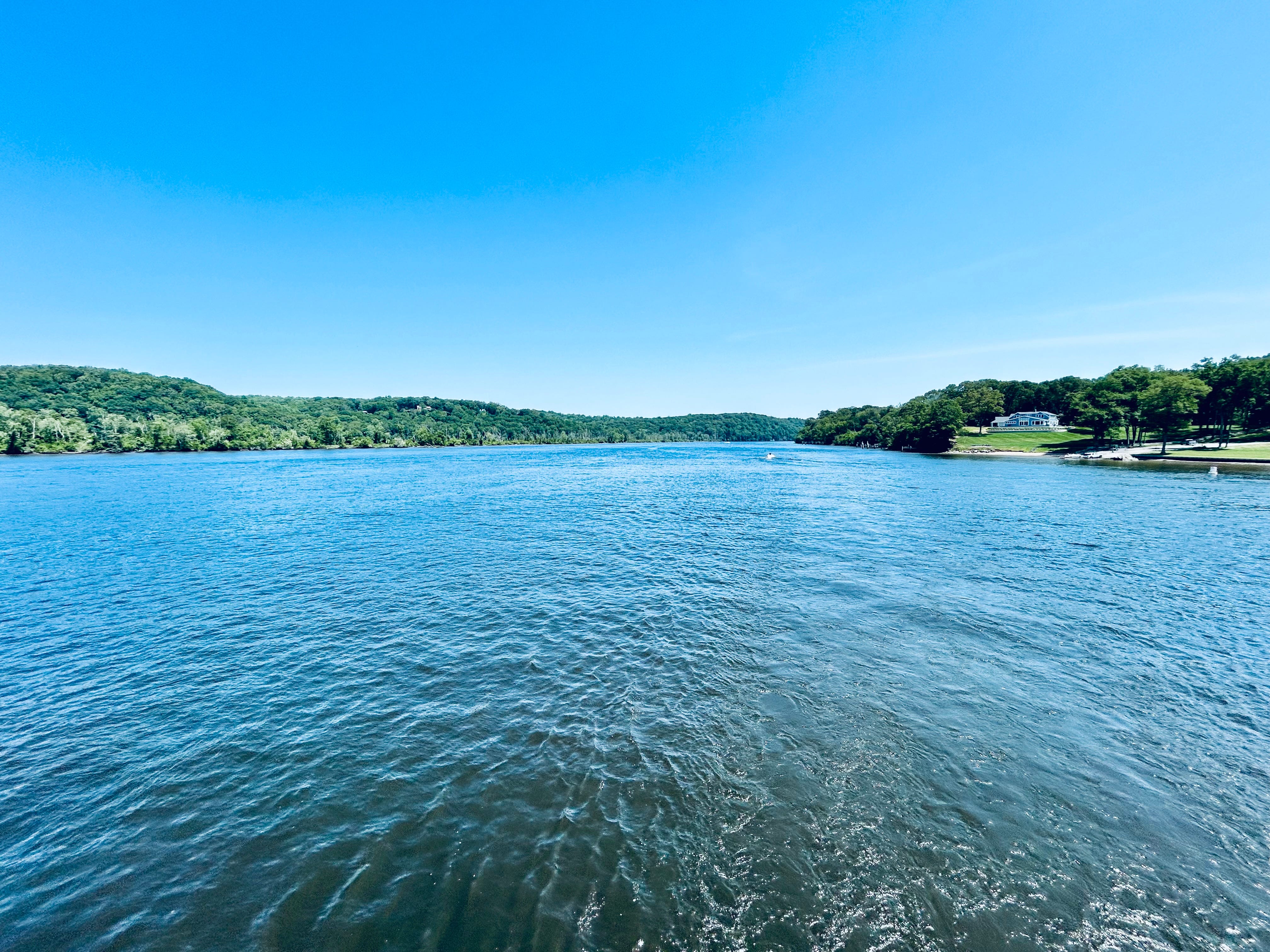
All types of travelers will appreciate this unique experience that combines a train journey with a riverboat cruise, perfect for a warm summer day or a cozy autumn afternoon. This wonderful attraction is available from May to October to coincide with the warmer weather in Southern New England, this seasonal offering is great for individuals as well as groups of friends and family. Solo travelers will enjoy the lovely ride, the informative narration, the chance to explore the riverboat, and the stunning views along the river. While those on a budget might hesitate at the cost, the experience is truly worthwhile, especially if you opt for a first-class seat on the train. You can indulge in a delightful train ride and riverboat cruise that fills your morning, afternoon, or early evening with unparalleled scenery.
The Essex Steam Train and Riverboat Cruise is located at 1 Railroad Ave in Essex, CT and typically kicks off around Mother's Day in May and wraps up in the last week of October. Be sure to check their website for more info and to grab your tickets. The hours can change throughout the year, but you can usually count on cruises and rides being available at least on weekends, and sometimes on Thursdays and Fridays too. Ticket prices are lowest with coach seating, which is great if you're short on time, with higher rates for Caboose seating.
If you want to do both the Steam Train and Riverboat Cruise, there is coach seating and first class seating. I know it can be pricey, but I really suggest treating yourself to the first class seating. The whole experience, including the train ride and riverboat cruise, lasts about 2.5 hours, taking up most of your morning, afternoon, or evening, and it's totally worth it.
If you're interested, they also have evening dinner trains called the "Essex Clipper Dinner Train" during the season. This includes a 4-course meal with options like prime rib, salmon, chicken, or a vegetarian pasta dish. These dinner trains fill up fast, so make sure to book your spot as soon as you can.
